About
DANalytics Environmental makes the science of local water understandable and useful, for the people who live with it and the organizations who measure it.
It is built by someone who has been collecting environmental data for almost 20 years.
Most environmental software is built from a requirements document. This one was built from nearly twenty years in the water — measuring flood flows from a cableway, chipping ice off a gage in January, pulling sondes so fouled you could not read the sensor face, and producing records that had to survive agency review anyway.
Every correction method, quality control threshold, and audit trail in this software exists because the person who wrote it knows how to collect and publish defensible data.
From the river to the software
DANalytics Environmental is an independent environmental data science company based in Carson City, Nevada. We build water quality analytics software for schools and educators, watershed coalitions, conservation districts, tribal environmental programs, and municipal utilities.
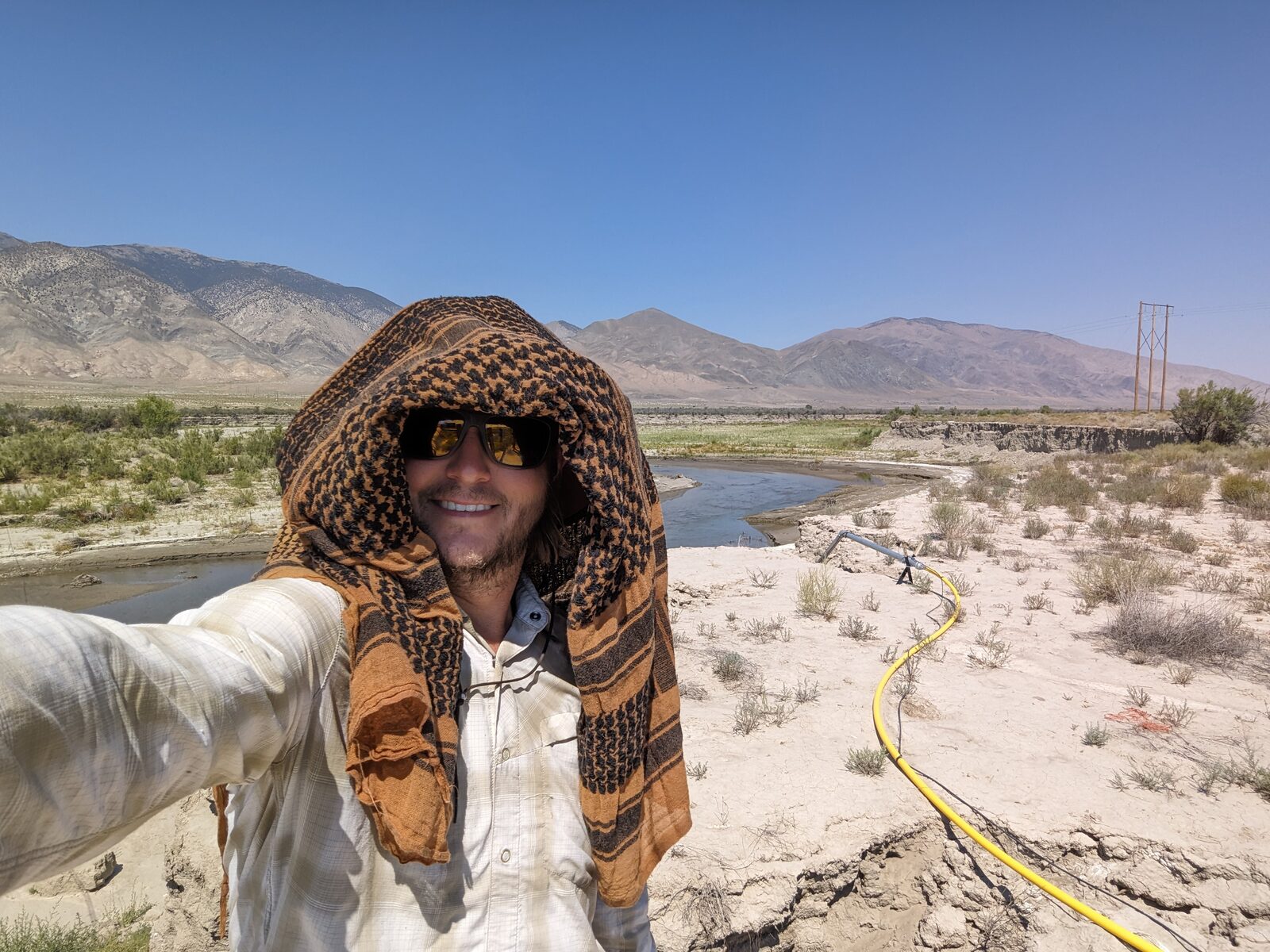
Daniel Riddle holds a B.S. in Chemistry and spent more than a decade with the U.S. Geological Survey as a Hydrologic Technician and Unit Water Quality Specialist. That work meant measuring streamflow in flood and in ice, servicing continuous water quality monitors throughout the Lake Tahoe Basin, pulling fouled sondes out of the water, and producing records that had to survive agency review. He served on details with the USGS Office of Quality Assurance, traveling to water science centers across the country to help ensure proper data collection protocols were being followed.
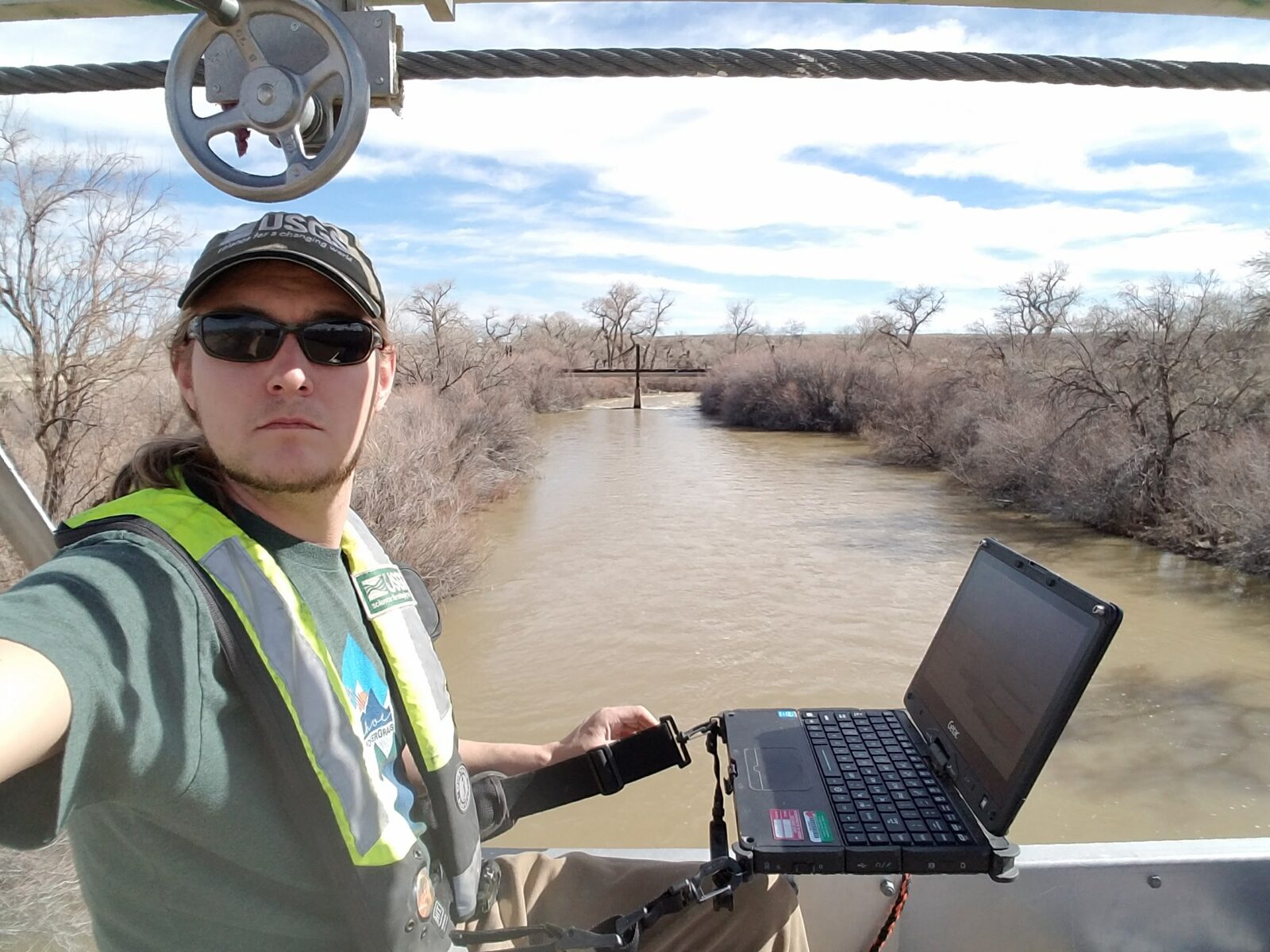
Measuring discharge from a cableway during high flow — U.S. Geological Survey, Nevada.
That experience is the reason the software makes the choices it does.
Fouling corrections run before automated quality control, because that is the order the data actually demands — correct first, and the algorithms flag genuine anomalies instead of systematic drift. The parameter dictionary exists because translating between field names, agency codes, and submission formats consumes real hours nobody budgets for. Every quality control flag carries a threshold, a trigger, and a reviewer, because a record without provenance is not a record.
None of that is guesswork. It is the accumulated experience of almost two decades doing it the way good science demands.
Today Daniel works as an environmental scientist and Quality Assurance Officer with the Nevada Division of Environmental Protection’s Bureau of Water Quality Planning, where he developed SAMalytics — a production R Shiny application used for all aspects of hydrologic data collection. This includes continuous data, discrete lab data, field discrete data, meter calibration files, and end-to-end workflows. His day-to-day duties also include reviewing outside data for inclusion in Clean Water Act reports, and developing internal monitoring strategies and field submission forms.
The pull toward teaching runs the whole length of that career. Daniel spent two years with AmeriCorps, where watershed education was roughly a quarter of the work, and he has kept finding his way back to it since — guest lecturing on data collection for the environmental science program at Lake Tahoe Community College, and taking Western Nevada College students into the field to see how a real measurement is actually made.
The smallest version of that work is the one he remembers best. A mother once asked whether her third-grade son, who lived beside a creek Daniel monitored, could talk about that creek at his school science fair. Daniel brought the USGS gear out, walked the boy through a discharge measurement, collected a suspended sediment sample alongside him, and sent him home with the sample and the printout to present. Project FLOW is that afternoon, rebuilt as software and pointed at a whole classroom.
A scientist and a teacher, at the same kitchen table
Project FLOW was not designed in a conference room. It got argued into existence over dinner.
Environmental science rigor and middle school pedagogy are two different disciplines, and almost every educational science tool is built by someone who has only one of them. The result is predictable: software that is scientifically serious and unteachable, or software that teaches beautifully and quietly lies about the data. Closing that gap normally means a company hiring a curriculum consultant for a few months.
Here it means being married.
Amy Riddle holds a master’s in education and a degree in natural resources interpretation, teaches science at Eagle Valley Middle School, and serves as Project FLOW Chapter Lead for the founding chapter on the Carson River. Daniel spent almost two decades in rivers and writes the software. She has the room full of twelve-year-olds and a motivated afterschool club who is interested in studying their own watershed.
Which makes the feedback loop unusually short, and unusually blunt. A lesson gets built on a Tuesday, meets thirty sixth graders on a Wednesday, and is told exactly what was wrong with it on Wednesday night. No survey, no pilot cohort, no quarterly review — just a teacher who was standing there when it failed, and a developer who cannot avoid her at breakfast.
That is the real advantage, and it is not one a larger company can buy. The science in the platform — the quality control algorithms, the correction methods, the water quality criteria, the data schema — comes from the scientist. The teaching — how a lesson is timed, how a twelve-year-old is met where they are, how a data anomaly becomes a discussion instead of a worksheet — comes from the teacher, with her own students, against her own standards. Neither of us pretends to be the other, and neither half of this works alone.
Every chapter that follows inherits what those two disciplines built together, and every teacher who runs it makes the next version better.
DANalytics Environmental LLC is an independent Nevada company. It is not affiliated with, endorsed by, or operated on behalf of any state or federal agency.
What we build
The platform is a family of modular analytics tools, each named for a riparian tree native to the watersheds we serve — CEDAR for continuous sensor data, ALDER for discrete and laboratory results, BIRCH for lakes and reservoirs. All of them share one data schema, one parameter dictionary, and one set of connectors to public agency data. Project FLOW takes the same engine into classrooms, as a chapter-based program schools and youth organizations run on their own watersheds.
See the full platform, editions, and pricing →
Built on time, not funding
Project FLOW has received exactly one grant: $5,000 from the Rotary Club of Carson City, which bought the original monitoring equipment — equipment that was then stolen out of the river before it produced a single record. The Nevada Division of Environmental Protection donated a continuous temperature logger and technical guidance. That is the whole of the outside support.
Everything else — the quality control engine, the parameter dictionary, the data schema, the dashboards, the report generator, the teaching layer — was built on time rather than money. There has been no outside investment in the software, and there is no runway to service.
That is worth stating plainly, because it explains a few things this site does that vendors usually do not. We publish which modules do not exist yet. We say on the chart what our own sampling design cannot see. We tell a school that the public demo is the wrong place to run a school year. Candor like that gets expensive when someone is waiting on growth numbers, and no one here is.
It also answers the question a district should ask about any small vendor: what happens if you run out of money? There was never any to run out of. The burn rate this has survived on is already close to zero, and it has been maturing at that rate for years.
The honest other half is that a one-person company is a one-person company. That is precisely why your data lives in open formats and why a complete export is available the day you ask for one, including the day you leave. A program’s records should never depend on any particular company continuing to exist — least of all this one.
Why this exists
Powerful environmental monitoring software is built for two kinds of organizations: the very large and the very well funded. Smaller groups — the three-person tribal water program, the volunteer watershed coalition, the science teacher with a sonde and a river — get a spreadsheet and a folder of CSVs. Those organizations are doing valuable work for their communities, and they deserve tools that match the importance of that work.
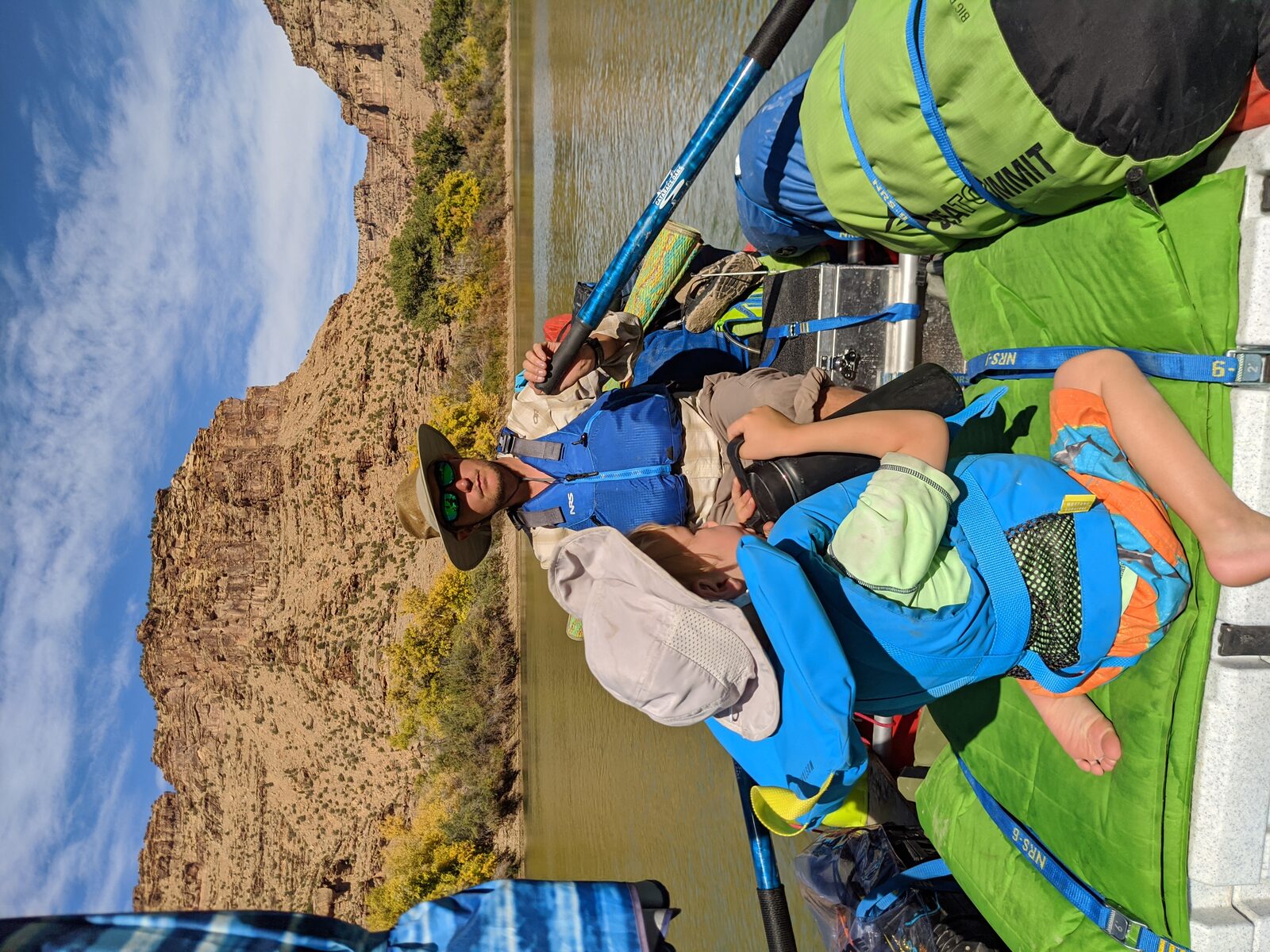
The second half of the mission is simpler. Rivers need people who understand them, enjoy them, and want to protect them. Project FLOW exists to help equip and inspire the next generation of watershed leaders and problem solvers with the tools and experiences needed to address future issues head-on.